
Implant Retained Dentures
Replacing missing teeth with implant retained dentures
Usually, when you lose a tooth, it is best for your oral health to have it replaced. Missing teeth can affect your “bite” as well as your ability to speak and chew. Their loss can increase the burden on your remaining teeth and can cause muscle pain in your jaws and headaches. And of course, losing a tooth can affect your appearance.
Why Choose Implant Retained Dentures?
Implant retained dentures offer a secure and long term solution for patients missing multiple teeth. Unlike traditional dentures that rest on the gums, implant supported dentures are anchored to dental implants placed in the jawbone.
This added stability helps:
• Reduce denture movement while speaking and eating
• Minimise sore spots and gum irritation
• Improve chewing efficiency
• Preserve jawbone structure
• Enhance overall comfort and confidence
For many patients in Hornsby, implant retained dentures provide a significant improvement in quality of life compared to conventional removable dentures.
The following information reviews replacing missing teeth with an implant retained denture.
Although many patients have no problem wearing an upper denture, some people find it difficult to wear and eat with lower dentures. Several implant-supported replacement options are available if you are missing all of your lower teeth.
What if I’m missing all of my lower teeth?
Ball Attachment Denture
One option is to have two implants placed in your lower jaw and a denture made that snaps onto these dental implants. This option allows your lower denture to be more stable while chewing than without implants. However, there will still be movement of your lower denture, and sore spots will occur if any food particles, especially seeds, are caught under it. As with all removable replacement teeth, you still will need periodic appointments for denture adjustment.
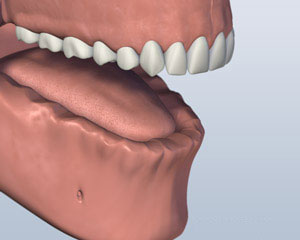
1. Before
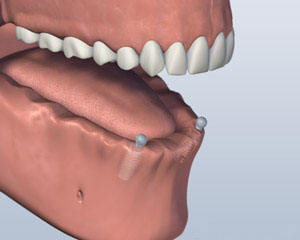
2. Implants Placed
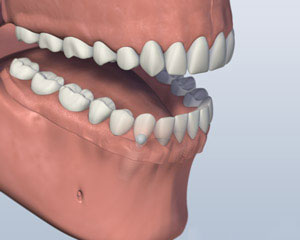
3. Denture Attached
Bar Attachment Denture
Another option involves placing four to six implants, depending on your jaw size or shape, into your lower jaw. After healing is complete, the implants are connected with a custom-made support bar. Your denture will be made with special internal retention clips that attach onto the support bar, enabling the denture to snap firmly into place. This is called an “overdenture.” The advantage of this option is that it is much more stable than the first option and allows very little denture movement. Your denture is still removable for easy cleaning and maintenance.
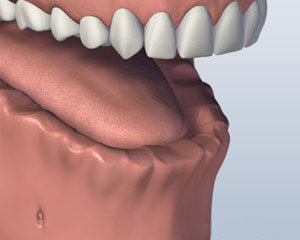
1. Before
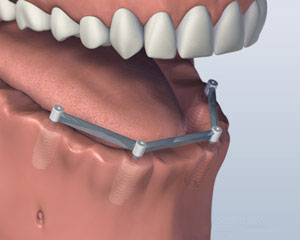
2. Implants Placed
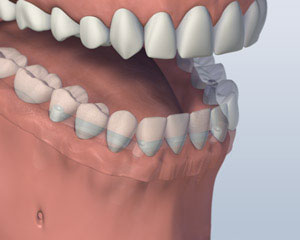
3. Denture Attached
Screw Retained Denture
A third option involves placing five or more implants in your jaw and attaching a permanent denture. Your denture is held in place by screws or clasps that secure it to the support posts or bar. It doesn’t touch the gum tissue, which allows you to clean under the denture without removing it. This denture will replace all your missing lower teeth and will not be removed except at maintenance visits. Although cleaning under your denture without removing it is more time consuming and requires more dexterity, many patients who want a permanent denture prefer this option.
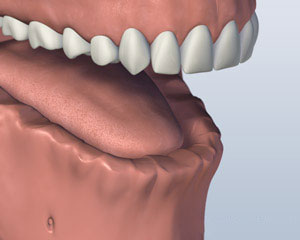
1. Before
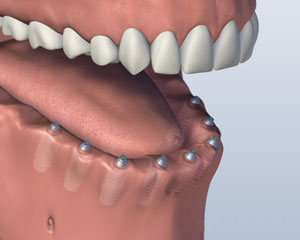
2. Implants Placed
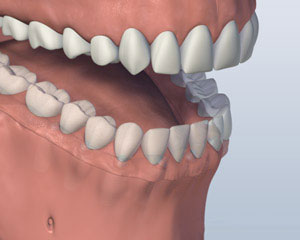
3. Denture Attached
What to Expect During the Implant Retained Denture Process
Getting implant retained dentures is a multi-stage process that takes place over several months. Understanding each step ahead of time can help you feel confident and well-prepared from your very first appointment through to your final fitting. Here is a step-by-step overview of what to expect.
Step 1: Initial Consultation and Assessment
Your journey begins with a comprehensive consultation at Hornsby Family Dental Care. During this appointment, your dentist will assess the health of your gums, the density and volume of your jawbone, and your overall oral health to determine whether implant retained dentures are the right solution for you. This assessment typically includes dental X-rays or a 3D cone beam scan to evaluate the bone structure and identify the most suitable implant positions.
If any preparatory work is required, such as tooth extractions or treatment for gum disease, this will be carried out before the implant process begins.
Step 2: Treatment Planning
Once your assessment is complete, your dentist will develop a personalised treatment plan tailored to your specific needs, jaw structure, and the type of implant retained denture most suitable for you. This plan will outline the number of implants required, the placement positions, the timeline for each stage of treatment, and the estimated costs involved.
Step 3: Implant Placement Surgery
The next stage involves the surgical placement of the dental implants into the jawbone. This procedure is carried out under local anaesthetic and is generally well tolerated by patients. The implants, which are small titanium posts, are precisely positioned in the jawbone to act as stable anchors for the denture.
What to Expect After Implant Surgery
- Mild swelling, bruising, and discomfort in the days following surgery are normal and can usually be managed with over-the-counter pain relief.
- Stick to soft foods during the initial healing period to avoid placing pressure on the implant sites.
- Follow all post-operative care instructions provided by your dentist carefully to support healing and reduce the risk of complications.
Step 4: Osseointegration (Healing Period)
After implant placement, a healing period of several months is required to allow the implants to integrate with the surrounding jawbone in a process known as osseointegration. This is what gives implant retained dentures their exceptional stability and long-term strength. The length of this healing period varies depending on the individual, but typically ranges from two to six months.
During this time, a temporary denture or healing appliance may be provided to maintain your appearance and function while the implants heal.
Step 5: Fitting the Support Bar or Attachments
Once osseointegration is confirmed, the next step depends on the type of implant retained denture you are having. For bar attachment or screw retained dentures, a custom support bar is fitted to the implants. For ball attachment dentures, the attachment components are connected to the implant posts. These components form the foundation onto which your denture will securely snap or clip into place.
Step 6: Fabrication and Fitting of Your Denture
Impressions or digital scans of your mouth are taken to create your custom denture. The denture is carefully designed to achieve a natural appearance, a comfortable fit, and correct bite alignment. Once fabricated, your denture is fitted and any necessary adjustments are made to ensure it snaps securely into place and feels comfortable in the mouth.
Step 7: Follow-Up and Ongoing Maintenance
After your final fitting, regular follow-up appointments at Hornsby Family Dental Care are important to monitor the health of the implants, the condition of the denture, and the surrounding gum tissue. Routine maintenance, professional cleaning of the implant components, and periodic denture adjustments will help ensure the longevity of your implant retained denture for many years to come.
What If I’m Missing All Of My Upper Teeth?
A similar range of treatment options is also available for your upper jaw. However, because the bone is not as hard as that in the lower jaw, people often need more implants to support their new replacement teeth. Depending upon the number of implants to be placed, it may be possible to eliminate the need for covering the roof of your mouth with a complete denture. This option allows you to fully taste your food and gives you a better sense of its temperature. Your denture will feel more natural. You will still have a removable denture, which makes cleaning the support bar and denture much easier.
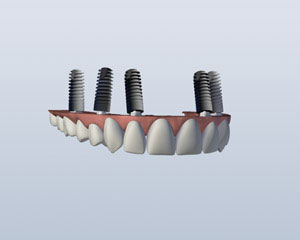
Implant Retained Upper Denture
Depending upon the number of implants to be placed, it may be possible to eliminate the need for covering the roof of your mouth with a complete denture. This option allows you to fully taste your food and gives you a better sense of its temperature. Your denture will feel more natural. You will still have a removable denture, which makes cleaning the support bar and denture much easier.
Implant benefits
- Improved confidence
- Stability during eating
- Bone and gum preservation
- Improved dental hygiene
- Superior esthetics
- Nutritional benefits
Frequently Asked Questions
What are implant retained dentures?
Implant retained dentures are dentures anchored to dental implants placed in the jawbone, rather than resting on the gums like traditional dentures. This provides significantly greater stability, reduces movement while speaking and eating, and helps preserve jawbone structure.
What types of implant retained dentures are available?
There are three main options. A ball attachment denture uses two implants and snaps into place, offering improved stability over conventional dentures. A bar attachment denture uses four to six implants connected by a support bar, providing even greater stability while remaining removable for cleaning. A screw retained denture uses five or more implants and is permanently fixed in place, only removed at maintenance visits.
How long does the implant retained denture process take?
The process takes place over several months and involves multiple stages, including an initial consultation, implant placement surgery, a healing period of two to six months for the implants to integrate with the jawbone, fitting of the support attachments, and finally the fabrication and fitting of the denture.
Are implant retained dentures available for the upper jaw as well?
Yes. A similar range of options is available for the upper jaw. Because upper jaw bone is less dense, more implants are often required. Depending on the number of implants placed, it may be possible to eliminate the need for a plate covering the roof of the mouth, allowing for a more natural feel and better taste sensation.
What ongoing care is required after fitting?
Regular follow-up appointments are important to monitor the health of the implants, gum tissue, and the condition of the denture. Routine professional cleaning of the implant components and periodic adjustments will help ensure the longevity of your implant retained denture.